
50/30/20 Rule: A Beginner’s Guide to Saving Money
If managing money feels challenging, you’re not alone. Between bills, savings goals, and trying to enjoy life, finding balance can be tough. That’s where the 50/30/20 rule helps — a simple, beginner-friendly budgeting method that keeps your finances organized without complex tools or spreadsheets.
What Is the 50/30/20 Rule?
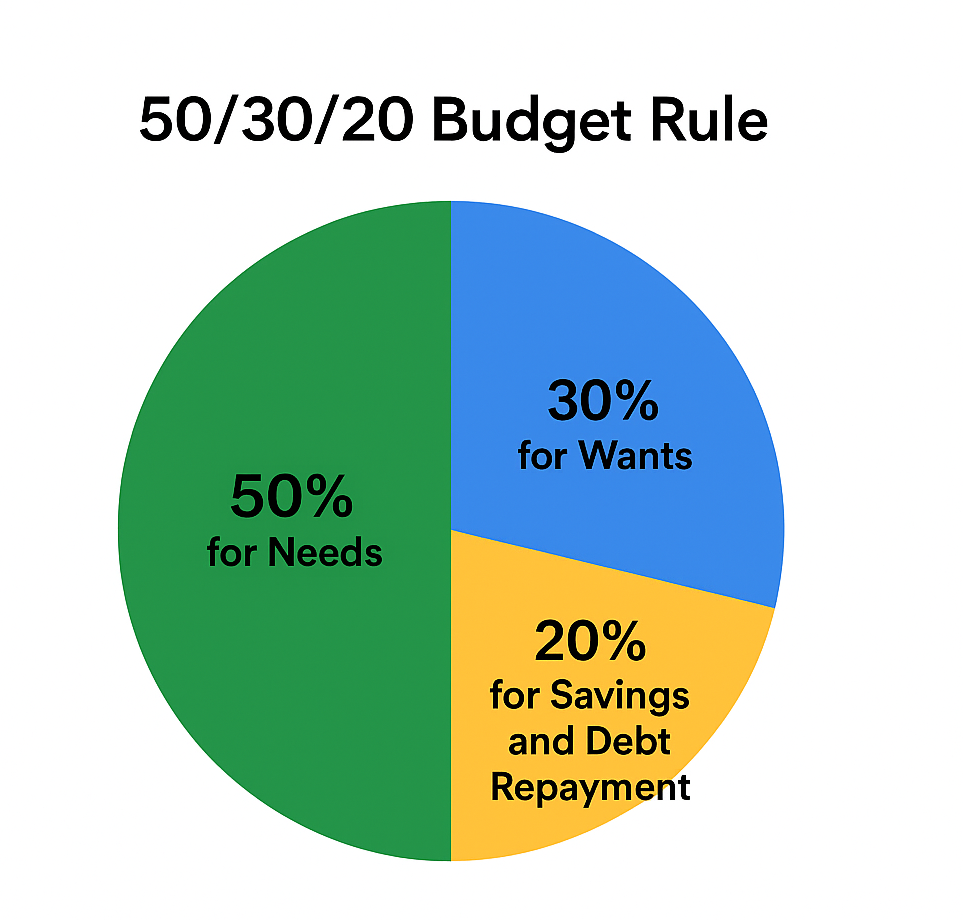
The 50/30/20 rule divides your after-tax income into three easy categories:
- 50% for Needs
- 30% for Wants
- 20% for Savings and Debt Repayment
This method was popularized by U.S. Senator Elizabeth Warren in her book All Your Worth: The Ultimate Lifetime Money Plan. It’s a realistic approach to help you live comfortably today while still preparing for tomorrow.
Spend 50% on “Needs”
Needs are essentials you can’t live without — the foundation of your budget. Examples include:
- Rent or mortgage
- Utilities (electricity, water, internet)
- Groceries and insurance
- Transportation and car payments
- Minimum loan or credit card payments
Tip: If your “needs” go beyond 50%, look for small adjustments — refinance a loan, switch to a cheaper plan, or reduce utility usage.
Spend 30% on “Wants”
These are your lifestyle choices — the things that make life fun but aren’t essential. Examples include:
- Eating out or ordering coffee
- Netflix, Spotify, or other subscriptions
- Shopping, hobbies, or travel
You don’t need to give up everything you love — just be intentional about your spending. Prioritize what brings real joy and skip the rest.
Allocate 20% to “Savings and Debt Repayment”
This portion builds your financial freedom. It includes:
- Emergency fund contributions
- 401(k) or IRA retirement savings
- Extra payments on credit cards or loans
- Investments (mutual funds, ETFs, etc.)
Even small steps count. The key is to be consistent — saving $100 every month is better than saving nothing at all.
Example Budget Breakdown
If your take-home pay is $4,000 per month:
| Category | Percentage | Amount |
|---|---|---|
| Needs | 50% | $2,000 |
| Wants | 30% | $1,200 |
| Savings/Debt | 20% | $800 |
Why the 50/30/20 Rule Works
- Simple – No complicated calculations or software
- Flexible – Fits most income levels and lifestyles
- Balanced – Encourages saving and living
- Mindful – Keeps you aware of where your money goes
How to Start Using the Rule
- Know your after-tax income. (Use your paycheck or a take-home pay calculator.)
- Track your expenses. Write down what’s a need, want, or saving.
- Adjust slowly. Make small changes each month.
- Automate savings. Set up automatic transfers right after payday.
Final Thoughts
The 50/30/20 rule gives you a clear path to manage your money — without giving up your lifestyle. Whether you’re saving for an emergency, paying off debt, or planning your next trip, this framework helps you spend wisely and save steadily.
Remember: budgeting isn’t about saying “no” — it’s about knowing when to say “yes.”
Take Control of Your Money Today
If this guide helped you, share it with a friend who struggles with budgeting — or start your 50/30/20 plan now and take the first step toward financial peace of mind.